
Why do online baccarat games give players more betting options?
Baccarat tables carrying only three wagering positions were the norm for most of the game’s documented history. That changed as digital delivery created both the technical capacity and the commercial incentive to expand what each round could offer an active player. A single dealt hand now supports multiple simultaneous placements across formats that would have been impractical to manage at a physical table with any reasonable dealing pace. The expansion did not happen arbitrarily. Each additional placement added to บาคาร่าออนไลน์ formats over time reflects a specific player demand that operators identified and responded to through deliberate format development.
Player engagement drivers
A round of baccarat concludes quickly. No decision points exist between wager placement and result confirmation, meaning the entire player experience during an active hand concentrates on the betting window and the result display. Formats carrying only three placement options exhaust that engagement window faster than formats offering secondary options alongside the main hand.
Additional placements extend meaningful activity within the same fixed round duration. A player with five active placements has more outcomes to follow during result confirmation than a player with one. That expanded outcome range does not slow the round or introduce complexity into the dealing sequence. It simply gives each dealt hand more resolution points that matter to the player watching it settle.
Competing format offerings
Licensed operators competing within the same regulated market need distinct table offerings to attract players across different preference profiles. A catalogue containing only classic three-placement Punto Banco gives players no format-based reason to choose one operator over another when game rules remain identical across the entire market.
Secondary placement layers create genuine differentiation between format offerings:
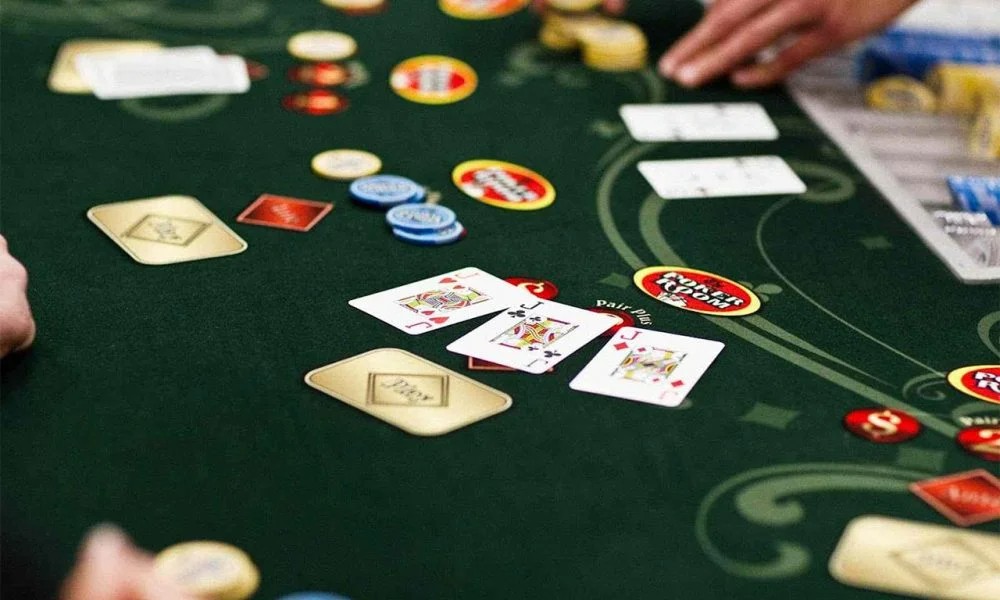
- Pair options attract players interested in opening card configurations beyond main hand outcomes
- Dragon Bonus placements draw players who want natural win margins to carry a separate return value
- Fortune Six structures appeal to players seeking commission-free Banker settlement alongside dedicated six-total options
- Progressive qualifying placements engage players motivated by accumulating prize pool participation
- Either Pair and Perfect Pair variations serve players wanting deeper pair condition coverage per round
Each addition addresses a distinct player preference rather than simply inflating placement counts without purpose.
Technology drives expansion
Physical baccarat tables face practical constraints around how many simultaneous placements a dealer can track, verify, and settle accurately within the standard round duration. Digital interfaces remove those constraints entirely. Every active placement across every connected player processes automatically through server-side settlement without requiring manual calculation or physical chip verification from anyone at the table.
That automation capacity means adding a placement to a digital format carries none of the operational overhead it would introduce at a physical table. Settlement accuracy stays consistent regardless of whether two placements or eight placements are active simultaneously across thousands of connected players in the same dealing window.
Player retention connection
Formats offering deeper placement structures retain active players across longer sessions for a straightforward reason. A player whose secondary placements produce returns independently from main hand results experiences positive settlement moments that pure three-placement formats cannot generate with the same frequency. A losing main hand that coincides with a winning pair placement produces a different session experience than a round where every active placement moves in the same direction simultaneously.
That outcome variety across multiple independent placement conditions creates a session texture that single-layer formats simply cannot replicate. Operators who recognised this connection between placement depth and session retention invested in format development that expanded options deliberately rather than maintaining minimal placement structures across their full table catalogue indefinitely.